Pearson Edexcel · A-Level · English Literature
Course version: 9ET0 · Version from Sept 2015
Poetry – Section A: Post-2000 Poetry – Poems of the Decade: An Anthology…
Full specification wording
Component 3: Poetry – Section A: Post-2000 Poetry – Poems of the Decade: An Anthology of the Forward Books of Poetry 2002–2011: From the Journal of a Disappointed Man Andrew Motion
Andrew Motion's 'From the Journal of a Disappointed Man' explores masculinity, physical labour, and the alienation of the observer.
Checked against the Pearson Edexcel 9ET0 specification (opens in a new tab) on .
- Point 16 of 20
- 3 key terms
Study notes
From the checked teaching notes for this specification point.
The idea
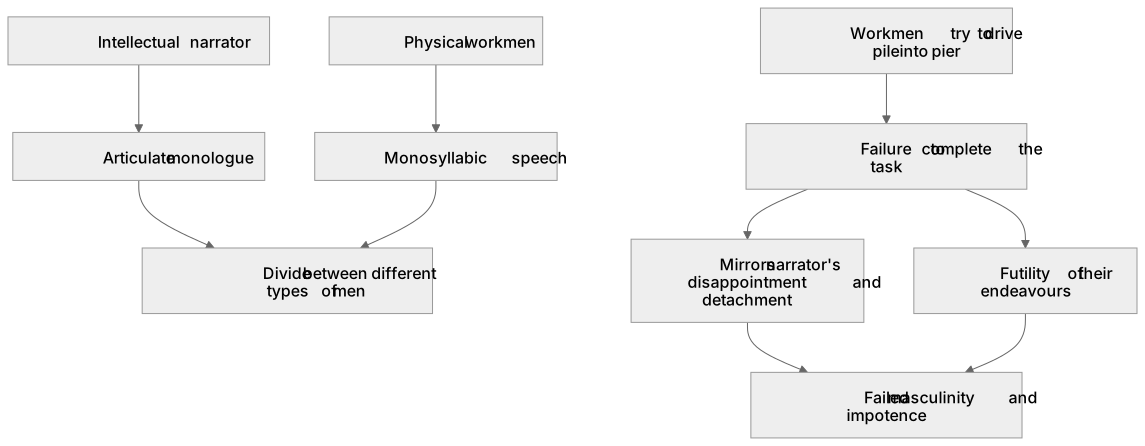
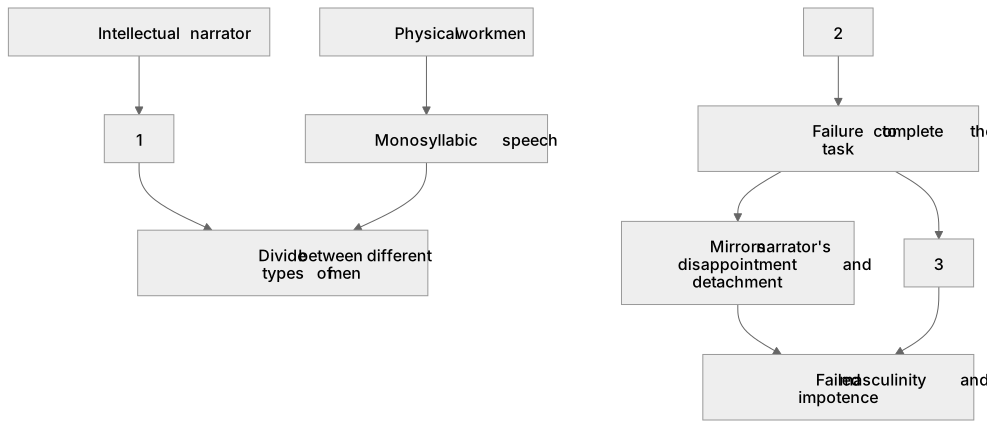
Andrew Motion's 'From the Journal of a Disappointed Man' explores masculinity, physical labour, and the alienation of the observer. The poem contrasts the silent, intellectual narrator with the physical workmen trying to drive a pile into a pier. Motion uses a regular stanza structure to reflect the repetitive nature of the work, while enjambment creates a conversational tone. The workmen's failure to complete their task mirrors the narrator's own disappointment and detachment from traditional masculine roles.
What earns the marks
- Analyse the contrast between the intellectual narrator and the physical labourers.
- Evaluate the use of regular four-line stanzas to represent the repetitive, mechanical nature of the workmen's task.
- Explore the theme of failed masculinity and impotence, symbolised by the pile that cannot be driven into the pier.
- Examine the use of enjambment and caesura to create a reflective, observational pace that contrasts with the physical exertion described.
Common mistakes and how to put them right
Assuming the narrator feels superior to the workmen.
Put it right: Recognise that the narrator feels alienated and equally disappointed in his own lack of purpose.
Ignoring the significance of the title.
Put it right: Explicitly link the 'disappointment' to both the workmen's failed task and the narrator's existential state.
Focusing only on the workmen's physical actions.
Put it right: Analyse the linguistic contrast between the men's sparse dialogue and the narrator's complex vocabulary.
Exam tips
- Compare the presentation of masculinity in this poem with other poems in the anthology, such as 'Giuseppe' or 'Material'.
- Use specific terminology like 'enjambment' and 'caesura' to explain how the poem's pace reflects the narrator's observational stance.
- Discuss the symbolic significance of the 'pile' and the 'pier' in relation to the theme of futility.
Try the lesson
The start of the Component 3: Poetry – Section A: Post-2000 Poetry – Poems of the Decade: An Anthology of the Forward Books of Poetry 2002–2011: From the Journal of a Disappointed Man Andrew Motion lesson, made from checked teaching notes for this specification point.
Have a go first
In Andrew Motion's 'From the Journal of a Disappointed Man', what activity is the speaker observing the workmen attempting to complete?
Listen
Andrew Motion's 'From the Journal of a Disappointed Man' explores masculinity, physical labour, and the alienation of the observer. The poem contrasts the silent, intellectual narrator with the physical workmen trying to drive a pile into a pier. Motion uses a regular stanza structure to reflect the repetitive nature of the work, while enjambment creates a conversational tone. The workmen's failure to complete their task mirrors the narrator's own disappointment and detachment from traditional masculine roles. A strong answer earns marks for these points. Analyse the contrast between the intellectual narrator and the physical labourers. Evaluate the use of regular four-line stanzas to represent the repetitive, mechanical nature of the workmen's task. Explore the theme of failed masculinity and impotence, symbolised by the pile that cannot be driven into the pier. Examine the use of enjambment and caesura to create a reflective, observational pace that contrasts with the physical exertion described. A common slip: Assuming the narrator feels superior to the workmen. Instead, recognise that the narrator feels alienated and equally disappointed in his own lack of purpose. Exam tip: Compare the presentation of masculinity in this poem with other poems in the anthology, such as 'Giuseppe' or 'Material'.
See it
Key words
Say what each word means before you turn the card.
Masculinity
Try answering aloud or in your head before turning the card.
Alienation
Try answering aloud or in your head before turning the card.
Futility
Try answering aloud or in your head before turning the card.
See every definition
- Masculinity
- The poem explores this through the contrast between the intellectual narrator and the physical workmen, and through failed masculinity and impotence.
- Alienation
- The state of the observer in the poem, who feels detached from traditional masculine roles and equally disappointed in his own lack of purpose.
- Futility
- The quality shown by the workmen's failure to complete their task, which mirrors the narrator's own disappointment and detachment.
Label the diagram
Some boxes have lost their names. Pick the right name for each number.
1Box 1
2Box 2
3Box 3
There is more to this lesson
The full lesson goes on to check your understanding and help you earn the marks. Create a free account to carry on, with your progress saved.
A week of Premium from your first lesson · Then the free plan continues · No card, no charge
Test your understanding of Component 3: Poetry – Section A: Post-2000 Poetry – Poems of the Decade: An Anthology of the Forward Books of Poetry 2002–2011: From the Journal of a Disappointed Man Andrew Motion
Active recall beats re-reading. Take an instant quiz now to test what you’ve learned and lock it into long-term memory.
A week of Premium from your first lesson · Then the free plan continues · No card, no charge